Interivew with Mona Lisa
Self-diagnosis isn't a destination — it's a journey toward solving the actual deficits in your life, not toward wearing a label.
Interview with Mona Lisa: Ryan Perez on Masking, Self-Diagnosis, and Fighting for Space
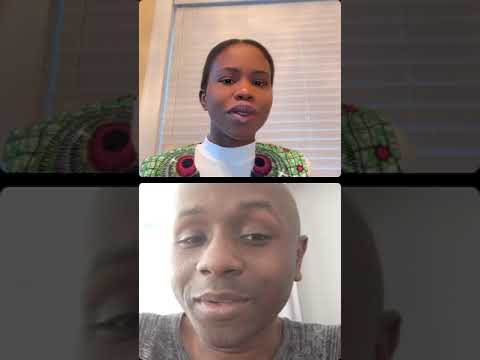
For Black History Month, a Hustle Zone livestream brought together host Mona Lisa and Calgary-based artist, author, and advocate Ryan Perez — known online as “digital stem cell” — for an hour-long conversation (that ran well over) about neurodiversity, art, and what it costs to be understood.
Mona Lisa opened the stream explaining her purpose: to spotlight abstract artists of color, people she defines simply as those making art “as pure as you can” with whatever they have. She and Ryan have known each other for roughly a decade, since meeting at the Obsidian Awards in Calgary’s hip-hop scene, where Ryan had been nominated. That history set the tone for a conversation that felt less like an interview and more like two friends catching up in public.
Ryan introduced himself as an author, an activist and advocate for neurodiversity and inclusivity, an artist, and a single father — someone who resists being pinned to one label because “one day I’ll be a comedian, one day I’ll be a lecturer.” He’s currently promoting his book, Pathway to the Heart, available for preorder.
Much of the early conversation traced how Ryan built his online following. He described making a video go viral nearly two decades ago — an undercover sting exposing a Calgary club that wouldn’t let Black patrons in — which he says forced the venue to change its practices and earned a local reporter, Jill Croteau, an award for the coverage. He stayed anonymous at the time to avoid the racist backlash the video drew, before eventually monetizing it through YouTube’s partner program.
The heart of the episode, though, was Ryan’s account of publicly identifying as autistic, dyslexic, and having ADHD. He explained that a close friend once called him a “fraud” for self-diagnosing, accusing him of “scamming people” — so he created the parody label “Mystic Autistic” as a way to combat the criticism while still speaking his truth. He was careful to note his largest following is actually built around dyslexia, not autism specifically.
Ryan repeatedly framed self-diagnosis as “a journey, not a destination” — a process of ruling out overlapping traits until you find what’s actually driving the deficits in your life, whether or not you land on a formal label. He connected this to diagnostic history, noting that autism criteria were historically built around “white college men,” which made it harder to recognize autism in women and people of color, who often mask more effectively.
Masking came up again and again — the exhaustion of hiding real behaviors to avoid being “clowned,” and Ryan’s admission that he hadn’t “been out” socially in 20 years despite a large online following. Mona Lisa connected this directly to her own experience of code-switching as a Black woman, describing the feeling of being an “impostor” in spaces where she’s succeeding.
Practical advice threaded through the back half of the show. Ryan described his own communication preferences — texting over voice notes or calendar reminders, which he says his brain tunes out — and named specific struggles familiar to many neurodivergent people: time blindness, rejection sensitive dysphoria, and difficulty completing paperwork, contracts, and emails, sometimes taking him a month to send a single important message.
He also relayed a personal story about losing a teaching job for neurodivergent children after mentioning “God” in an interview that had otherwise gone well, framing it as a form of hidden religious discrimination. On accommodations more broadly — including a listener’s account of an employer refusing to let them wear sensory earplugs — Ryan was direct: know your employment rights, escalate if needed, and be prepared to leave if an employer won’t budge. He was equally blunt that “HR is not for people,” arguing that real change has to come from leadership, not policy alone.
Asked what single rule the universe should follow, Ryan didn’t hesitate: “be yourself.” He tied it to a phrase he’s been repeating for months — “you exist, therefore you matter” — arguing that claiming your right to exist is the starting point for advocating for anything else. The stream closed with Ryan pointing listeners to digitalstemcell.com, his Patreon, and his book preorder, and a reminder that supporting artists directly — buying books, merch, or simply donating — is how independent creators survive.
Lessons from this one
Self-diagnosis works best as a problem-solving process aimed at real-life deficits, not as a search for an identity label.
Ryan describes self-diagnosis as "a journey, not a destination" — narrowing down overlapping traits like dyslexia, ADHD, and autism until you find what's actually causing the deficits you want to change, rather than chasing the diagnosis itself.
Masking neurodivergent traits can protect against social rejection but carries a long-term emotional cost.
Ryan says he masked for years, hadn't 'been out' socially in two decades, and describes the pain of hiding autistic behaviors to avoid being 'clowned,' while also arguing people should unmask when it's safe and mask strategically only when necessary.
Diagnostic criteria historically built around white men has delayed recognition of autism in women and people of color.
Ryan states that autism diagnostic criteria were historically centered on 'white college men' and that women in particular mask more effectively, which he says is only now being corrected as diagnostic research evolves and more women and people of color self-identify.
Workplace accommodation for neurodivergent employees is framed as a rights issue that sometimes requires knowledge of the law and willingness to escalate.
Responding to a listener whose employer denied sensory earplugs, Ryan advises learning employment law and being prepared to fight or leave, and separately argues that HR exists to protect the organization rather than employees, so real accommodation change has to come from leadership.
Subtle cues unrelated to job performance, such as religious expression, can quietly derail an otherwise successful interview.
Ryan recounts losing a job teaching neurodivergent children after mentioning 'God' in response to an interview question, despite what he felt was a strong interview up to that point, describing it as a form of hidden religious discrimination in hiring.
Sources
- Sarrett, J.C. (2016). "Biocertification and Neurodiversity: the Role and Implications of Self-Diagnosis in Autistic Communities." Neuroethics, 9(1), 23-36.
- Hull, L., Petrides, K.V., Allison, C., Smith, P., Baron-Cohen, S., Lai, M.C., & Mandy, W. (2017). "'Putting on My Best Normal': Social Camouflaging in Adults with Autism Spectrum Conditions." Journal of Autism and Developmental Disorders, 47(8), 2519-2534.
- Mandell, D.S., et al. (2009). "Racial/Ethnic Disparities in the Identification of Children With Autism Spectrum Disorders." American Journal of Public Health, 99(3), 493-498.
- Job Accommodation Network (JAN), U.S. Department of Labor Office of Disability Employment Policy. "Neurodiversity" workplace accommodations page.
- Wallace, M., Wright, B.R.E., & Hyde, A. (2014). "Religious Affiliation and Hiring Discrimination in the American South: A Field Experiment." Social Currents, 1(2), 189-207.
- Runtime
- 1h 35m
- Show
- HustleZone
- Host
- Ryan Perez
Been through something like this?
HustleZone is conversations with people who built something out of the thing that was supposed to stop them. If that is you, say so.