Unlock Pleasure: Why Foreplay & Communication Matter in Intimate Relationships
As one host half-joked mid-episode, "feeling safe makes me come" — trust isn't a nice-to-have before pleasure, it's the precondition for it.
Unlock Pleasure: Why Foreplay & Communication Matter in Intimate Relationships
Peasant Sex and Relationships
This episode of Peasant Sex and Relationships, hosted by Twilight Ray, opens with a promise that things are about to get uncomfortable in the best way. Guest Clarissa returns for a second appearance — the first episode covered toys in the bedroom — and this time the subject is bigger: the pleasure gap, the real purpose of foreplay, the body’s erogenous zones, and how partners can actually talk to each other about sex instead of just having it.
The numbers that started the conversation
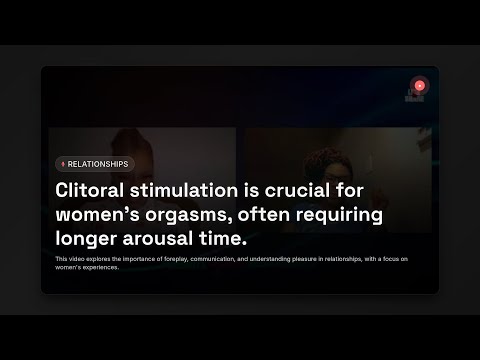
The host opens by walking through a set of statistics pulled from two books — Katherine Rowland’s The Pleasure Gap and a title referred to in the episode as Becoming Cliterate — and admits to being “flabbergasted” by them on first read. Among the figures cited: more than 50% of women with vulvas report faking orgasm; women are reportedly four times more likely than men to say a sexual encounter wasn’t pleasurable; men have somewhere between 20 and 50% more orgasms than women in partnered encounters; and only about 5% of women can reach orgasm through penetration alone. Depending on which study is cited, somewhere between 75% and 95% of women need clitoral stimulation, either alone or alongside penetration, to climax — with roughly 80% cited as the generally agreed-upon figure. The episode also notes that women with vulvas typically need 20 to 40 minutes to build arousal to orgasm, while masturbation gets the job done, on average, in three minutes or less — a gap the hosts use to make a simple point: rushed sex and pleasurable sex are rarely the same thing.
Foreplay as a physiological process, not a formality
Rather than treating foreplay as a warm-up act, the hosts frame it as a physiological necessity. Foreplay, Clarissa explains, is about “getting the mind in the game” so the body can follow — it triggers blood flow and chemicals like oxytocin, and it physically prepares the vagina, which can expand from roughly three inches to six once aroused. Skip that step and go in deep too soon, the hosts warn, and the result is pain, which “shuts the brain down” and ends any chance of orgasm. They also spend time walking through erogenous zones for both men and women — from the scalp, ears, neck, and small of the back, to hands, feet, inner thighs, nipples, and genitals — making the point that everyone’s map is a little different, and that the clitoris, with its roughly 8,000 nerve endings, was “literally designed for pleasure.”
Shame, trust, and why women stop speaking up
A good portion of the conversation traces the orgasm gap back to history and culture rather than biology — referencing Freud’s old claim that women should orgasm through penetration, and the layers of religious and social shaming that followed. Clarissa shares that in her own first serious relationship, being told she “didn’t know what an orgasm was” after voicing that she hadn’t climaxed taught her to simply stop speaking up. The hosts connect this to the prevalence of sexual trauma — citing figures of one in three or one in four women, depending on region — and argue that safety and trust have to come before honest communication can happen at all.
Practical tools: course-correcting in the moment
The most actionable stretch of the episode is about communication technique. Clarissa recommends “course-correcting in the moment” rather than bringing up a complaint days later, when a partner has already forgotten the context — physically guiding a partner’s hand to show, rather than tell, what feels good. Both hosts push back on the idea that this needs to happen only during sex, encouraging listeners to build a regular habit of talking about pleasure outside the bedroom — over coffee or wine, as a proactive, ongoing conversation rather than a reactive one triggered by a problem.
Reading the body, not just the noise
Toward the end, the conversation turns to how partners can tell a real orgasm from a performed one — describing involuntary, patterned muscular contractions and labored breathing, as opposed to a deliberate squeeze, and noting that the body often flattens and the hips rise rather than the back arching dramatically, as pop culture tends to depict. The hosts are careful to add that not every woman is vocal or expressive during sex, and that there’s no single “correct” way for pleasure to look.
The episode closes with a simple set of takeaways: pleasure is each person’s own responsibility, trust and safety have to be built deliberately, correction works best in the moment, and the hard conversations are worth having sooner rather than later.
Lessons from this one
Women are encouraged to treat their own pleasure as their own responsibility rather than something a partner should intuit.
A real, relevant study exists but its findings are more nuanced than a simple 'practice makes perfect' story: Kontula & Miettinen's large Finnish population study on determinants of female orgasm found masturbation and self-knowledge of one's body are genuine, measurable factors in women's orgasmic patterns, but did NOT find a straightforward positive relationship between masturbation frequency and ease of orgasm during partnered intercourse — some women who orgasmed easily via masturbation had more difficulty during intercourse. This supports the general premise that self-knowledge is a real, studied variable in female orgasm, but does not confirm a simple direct-transfer mechanism from solo practice to partnered sex the way the episode implies.
Giving feedback during sex works better than saving it for later, because the moment and its context get lost quickly.
No controlled study was found that directly isolates 'in-the-moment' versus 'delayed' sexual feedback as its own variable. The closest real, verifiable research is Mallory's 2022 meta-analysis of couples' sexual communication research, which finds that the quality, frequency, and openness of sexual communication (broadly) is positively associated with both sexual and relationship satisfaction. This contextualizes why communicating preferences matters at all, but the specific claim that real-time correction outperforms delayed feedback (versus communication quality/frequency in general) reflects Clarissa's own practitioner experience rather than a study that tested timing specifically.
The mismatch between how female orgasm actually works and how sex is typically performed (penetration-first, rushed) helps explain the 'orgasm gap.'
The 'orgasm gap' between heterosexual men and women is a real, well-documented finding: Frederick et al.'s U.S. national sample study found heterosexual women reported orgasming far less consistently during partnered sex than heterosexual men (and less than lesbian women), a gap not explained by biology alone. On the specific percentages, Kontula & Miettinen's population study (also cited above) found only about 6% of women reliably orgasm from vaginal/penetrative stimulation alone, while the remainder require clitoral stimulation either alone (34%) or combined with vaginal stimulation (54%) — figures in the same range as the episode's cited 5%/75-95% split, though exact percentages vary by study and survey methodology.
Emotional safety and trust function as a precondition for honest sexual communication, not a bonus on top of it.
The prevalence figures cited in the episode are in the range of real, authoritative data: WHO's global fact sheet estimates that about 1 in 3 (31.6%) women worldwide experience physical and/or sexual violence in their lifetime, with additional non-partner sexual violence affecting roughly 8% of women separately. U.S.-specific data from the CDC-authored National Intimate Partner and Sexual Violence Survey (NISVS) 2010 report is also commonly cited for the 'one in three or four women' range depending on the definition and country used. This supports that sexual trauma is a well-documented, prevalent factor plausibly shaping women's willingness to speak up during sex, though the direct causal link between trauma prevalence and any individual woman's likelihood of 'staying quiet or faking pleasure' reflects clinical/anecdotal reasoning rather than a single controlled study tying the two together.
World Health Organization (2024). "Violence against women" fact sheet.
Reducing a partner's mental load (chores, to-do lists) can directly improve her ability to be present for and enjoy sex.
No controlled study was found that directly tests the specific intervention described (a partner handling a chore beforehand improves presence/enjoyment during sex). However, two real bodies of research contextualize the underlying logic: Rosemary Basson's influential model of female sexual response distinguishes 'spontaneous' from 'responsive' desire, arguing that many women's desire depends heavily on context and state of mind rather than arising independently of it — supporting the idea that mental state (including cognitive load) shapes capacity for arousal. Separately, Kornrich, Brines & Leupp's American Sociological Review study found that couples with a more unequal division of housework reported lower sexual frequency, a real, related empirical finding connecting household labor burden to sexual outcomes, though it measures frequency rather than in-the-moment presence or enjoyment.
Sources
- Kontula, O., & Miettinen, A. (2016). "Determinants of female sexual orgasms." Socioaffective Neuroscience & Psychology, 6, 31624.
- Frederick, D. A., St. John, H. K., Garcia, J. R., & Lloyd, E. A. (2018). "Differences in Orgasm Frequency Among Gay, Lesbian, Bisexual, and Heterosexual Men and Women in a U.S. National Sample." Archives of Sexual Behavior, 47(1), 273-288.
- Mallory, A. B. (2022). "Dimensions of couples' sexual communication, relationship satisfaction, and sexual satisfaction: A meta-analysis." Journal of Family Psychology, 36(3), 358-371.
- World Health Organization (2024). "Violence against women" fact sheet.
- Basson, R. (2000). "The Female Sexual Response: A Different Model." Journal of Sex & Marital Therapy, 26(1), 51-65.
- Kornrich, S., Brines, J., & Leupp, K. (2013). "Egalitarianism, Housework, and Sexual Frequency in Marriage." American Sociological Review, 78(1), 26-50.
- Runtime
- 1h 18m
- Show
- Peasant Sex and Relationships
- Host
- Ryan Perez
Been through something like this?
Peasant Sex and Relationships is conversations with people who built something out of the thing that was supposed to stop them. If that is you, say so.